
Dossier No. 01
The furnace that had no drawings
A gas-turbine repair line needed vacuum heat treatment. Buying the furnace was out of reach — so we made the drawings, then the furnace.
Problem
The company was establishing an in-house repair line for gas-turbine hot-section components, and the line needed vacuum heat treatment. A purchased furnace was prohibitively expensive, and the only input that existed was the operational requirement itself: component sizes, materials, thermal cycles. No drawings. No specification. No reference unit to measure. Around it all, an environment of unreliable grid power and high summer temperatures.
Journey — model
With no existing design to start from, I worked simulation-first — modelling the concept and benchmarking it against published academic work, because there was no physical furnace to reference. I designed the supporting systems to run reliably in the site's difficult conditions.
Plate I · Matter ↔ Model
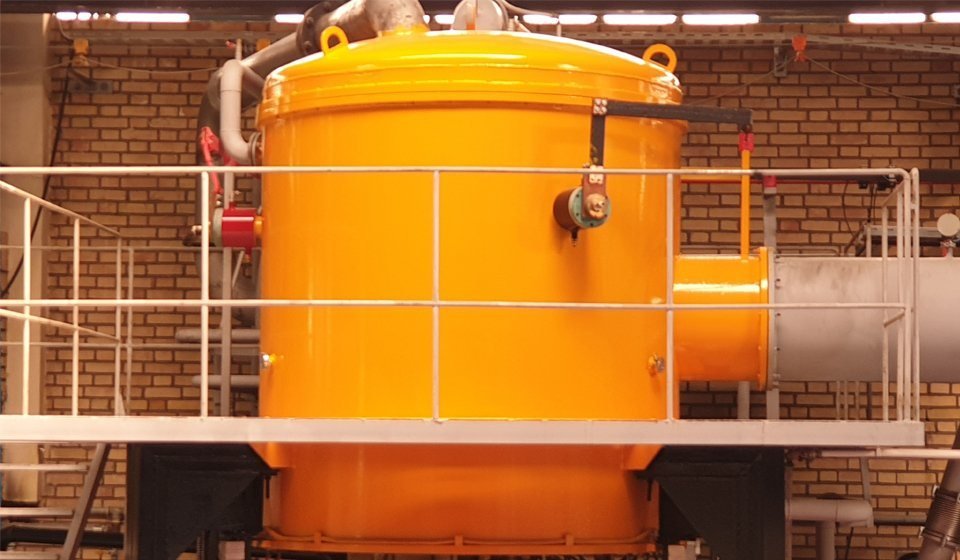
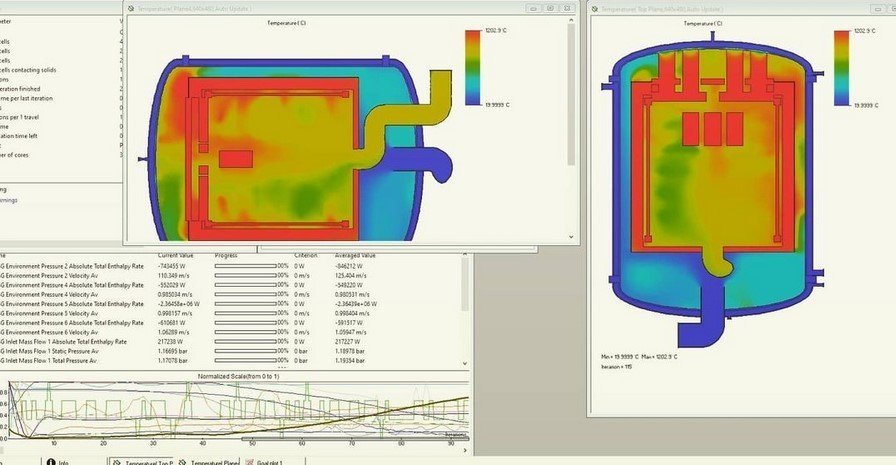
Journey — commissioning
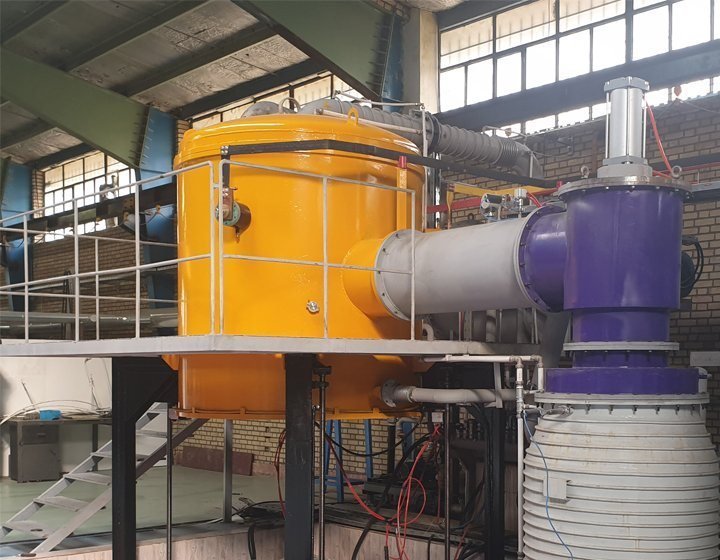
Commissioning threw up problems that took practical redesign and hard engineering judgement to settle before the furnace ran stably and repeatably. Where equipment behaved differently from its specification, I adapted the system rather than wait — and learned the control-system programming the project needed along the way.
Outcome
The furnace was built, commissioned and integrated into the intended repair workflow, and the in-house build avoided a major capital purchase. It ran as designed: vacuum heat treatment for turbine hot-section components.
Reflection
This project set the pattern I still work to: model before metal, and correlate after. The simulation gave us the confidence to build without a reference; the commissioning problems reminded us that judgement finishes what analysis starts.